Pre-Blog Info
Be yourself; Everyone else is already taken.
— Oscar Wilde.
This is the first post on my new blog. I’m just getting this new blog going, so stay tuned for more. Subscribe below to get notified when I post new updates.
Be yourself; Everyone else is already taken.
— Oscar Wilde.
This is the first post on my new blog. I’m just getting this new blog going, so stay tuned for more. Subscribe below to get notified when I post new updates.
Cal Poly’s MPC. MP – what? Cal Poly’s Meat Processing Center has not only became well known among many universities, but has grown and developed in so many ways that have allowed the processing plant to become more than just a processing plant. Founded in 1952, the on-campus meat market, Cal Poly Meats, began serving the local community with the freshest meat products available. What started out as a small retail shop later developed into today’s Cal Poly Meat Processing Center. This processing plant, completed in 2011, was funded by the J & G Lau family and includes all stages of meat processing, from harvesting to packaging. This top-notch facility processes a variety of species including the following:
As the Meat Processing Center continues to strive to produce the beat-quality product to consumers, this facility continues to provide hands-on learning experiences for students at Cal Poly. Students can get involved at this award-winning processing plant through classes, enterprises, and employment opportunities. Third year, Agricultural Communications student, Mahlon Owens is currently an employee at the Meat Processing Center. Owens claims, “I was just curious on that aspect [processing] and I figured that it would help me widen my knowledge of the industry in which I am planning to go into [cattle industry].”
Below, I have included a brief interview with MPC employee and fellow Cal Poly student, Mahlon Owens.
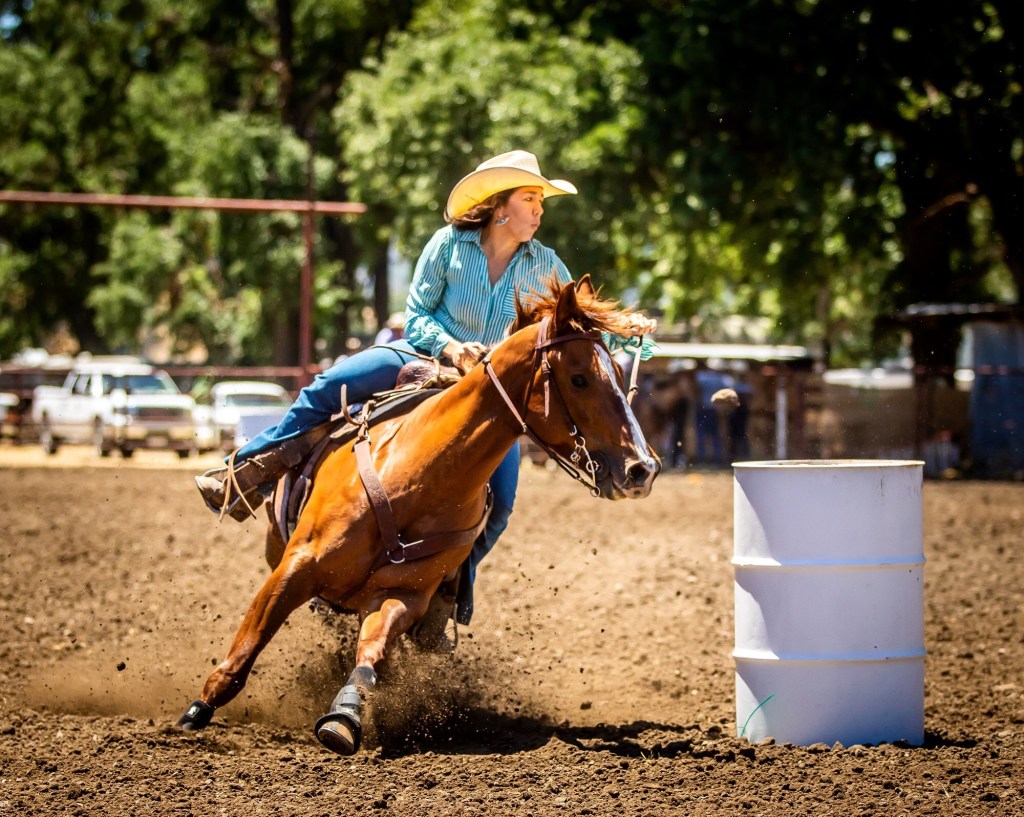
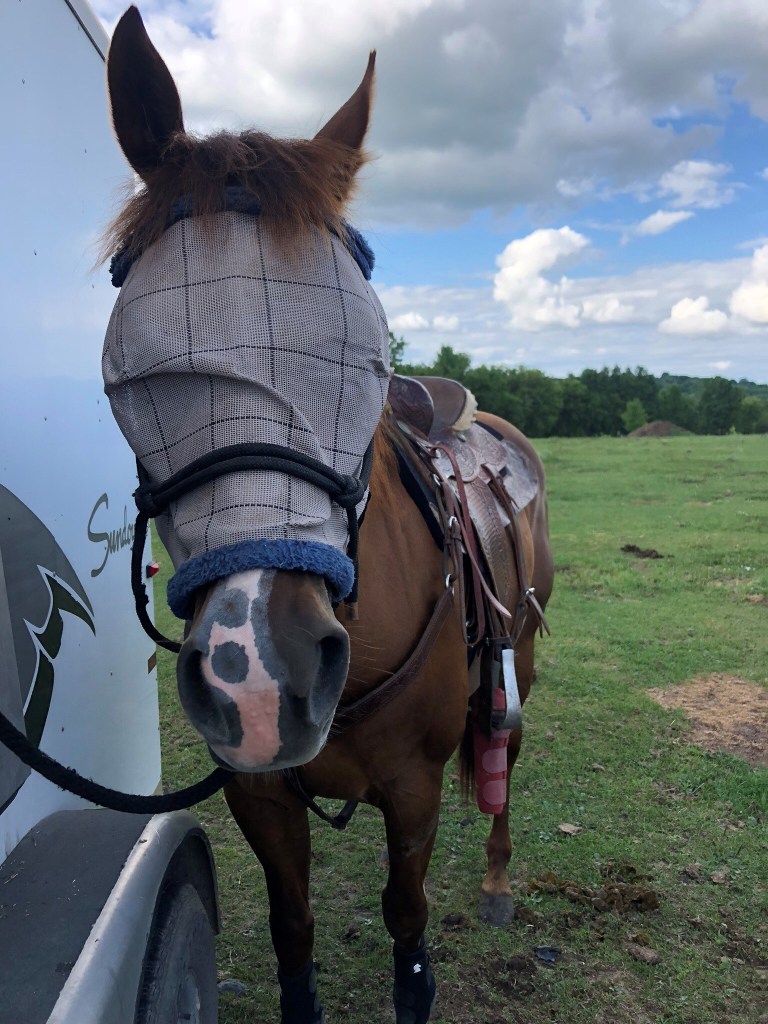
From energy to protein to fiber, the nutrition protocol for a performance horse is essential for maintaining these athletes’ body conditions and for meeting all nutritional requirements. My horse, Margarita, is an all-star barrel horse in the making. Twice per day, my 8 year-old mare is examined, fed and given water. As I am checking her water twice per day to monitor water intake and refilling as needed, Margarita also receives a very specific diet consisting of a few different feeds.
One part of that diet is her grain. In addition to Margarita’s primary grain, Nutrena Pro Force Fuel, I also add in two different supplements on top of her grain. As I repeat this process of graining my “big dog” once per day, there are a few simple steps. As I go into her stall, I first grab her bucket hanging on one side of the stall. Secondly, I go into my trailer and pour one quart-sized scoop of grain into the bucket. After pouring the grain into her bucket, I sprinkle over one scoop of glucosamine powder on top of the grain. Prior to Margarita eating her grain she so loves, I then add two pumps of Formula 1 supplement on top of the glucosamine. Last, but not least, Margarita gets to indulge on her daily snack of grain.
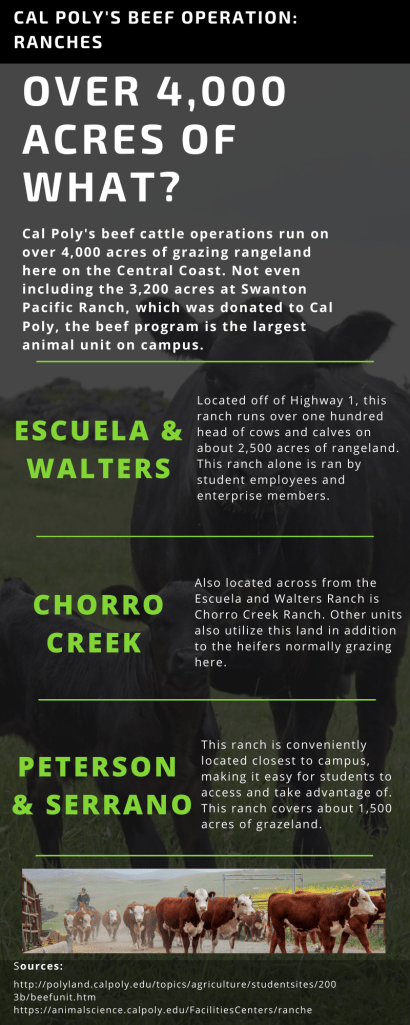
Located in the Central Coast of California, among thousands of ranches, are hundreds of “-P” brands moving and grazing on mountains known as the ranches of California Polytechnic State University. These roaming four-legged creatures make up Cal Poly’s beef cattle program and cow/calf operation. The beef unit at Cal Poly runs hundreds of head among a few different ranches mostly nearby campus, with one exception. Stripping these hills, the herds have over 4,000 acres to graze on! That’s right, over 4,000 acres of beautiful grazeland. Most universities don’t even have the ability to fully run and manage an entire herd, let alone over a thousand acres. I am here to share why that number is so significant.
These ranches represent more than just the starting number of 4,000. These ranches stand behind hard work, learning, and most importantly, the lives of these animals. Located near campus, there are three separate ranches that embrace each of these values. One being closest to campus, the Peterson and Serrano ranches make up about 1,500 acres of the total estimated rangeland. Closer to Cuesta College off of Highway 1 in San Luis Obispo are the Escuela and Walters ranches and Chorro Creek Ranch, covering more than 2,500 acres of land. Near Davenport, California lies Swanton Pacific Ranch, which makes up alone 3,200 acres of grazeland, donated to Cal Poly in 1993. Behind each of these ranches is the best learning experience any agriculturist or young cattlemen could ask for. Through jobs, enterprises, and other involvement opportunities, students have the chance to learn what is takes to manage and keep a herd.
Why “surprising” may not be the word I choose to describe this number, beyond impressive is what it is. It is more than just a number value, but a value that shows the true meaning of a cattlemen’s lifestyle in the agriculture industry.
Hearing about journalism, one word came to mind: writing. But within the last three classes, I have learned that journalism is so much more than that. Journalism is voice. Journalism is a way to connect people from all different backgrounds with other people from all over the world.
My first impression of this class leaves me with a simple question as I begin to look into my career path: how can I, as an agriculture advocate, connect people from all walks of life to come to a basic understanding of what agriculture means and how significant it is in our world?
As a third-year Animal Science major, minoring in Agribusiness, I am constantly working with not only livestock, but the people within the industry. Learning to work with the livestock is just as important as working with the people within the field and outside of the field. As misconceptions and different perspectives on the livestock industry take a toll on agriculture, I want to learn the key aspects of how to communicate and come together with professionals as well as non professionals within the industry.
My passion lies within the field of agriculture and always has. With a goal of heading into the sales and marketing field, being able to communicate with all people is essential. In addition to learning the key aspects of communicating with agriculturists inside my field, I would also like to use this class as a tool to learn how to communicate with people outside of the industry. This right here is what truly makes a difference – communicating with the people who don’t understand your perspective.
In this class, I am learning that journalism is and will continue to be a huge factor in communication as the field of agriculture takes huge steps forward everyday.
It’s safe to say that there are ups and downs to living an agricultural lifestyle. From sick livestock to public controversies to fluctuations in the farming market, there are decisions that need to be thought about on a daily basis.
Let’s take a look at the livestock industry. Imagine you’re a cattle rancher managing 300 head as a cow/calf operation. There are hundreds of day-to-day factors to constantly take into consideration, analyze, and then make decisions about. Alongside these factors, come risks and potential problems. Whether that be the whole herd catching pink eye or a water pipeline breaking or not enough cows being successfully bred in time, there are decisions to think about everyday. Let’s say we are about to get heifers bred and the bull being used breaks a leg. Perhaps you don’t have another bull ready to go. Well, what would you do? Put yourself in that cattleman’s boots and think about how plans are about to be rearranged.
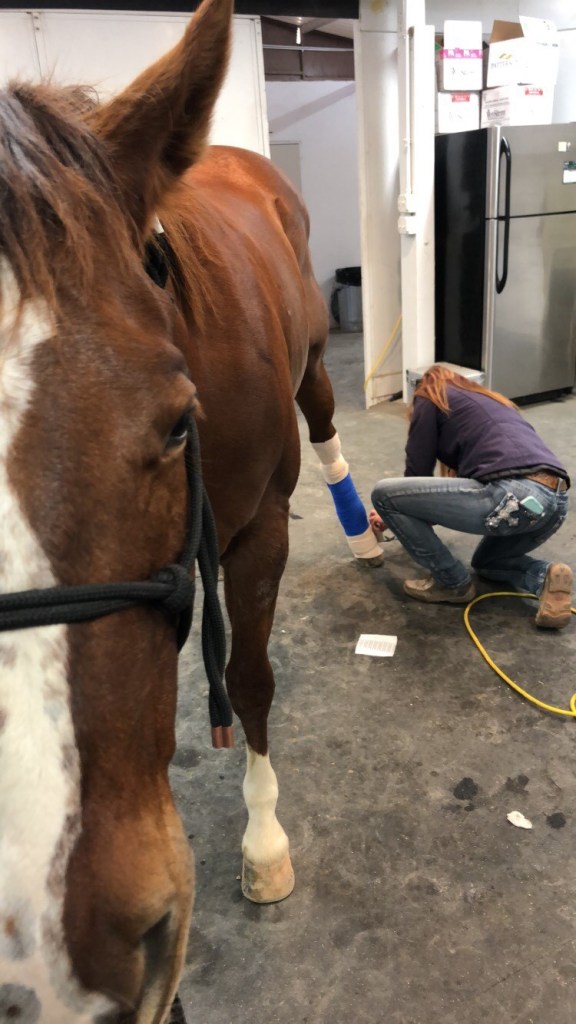
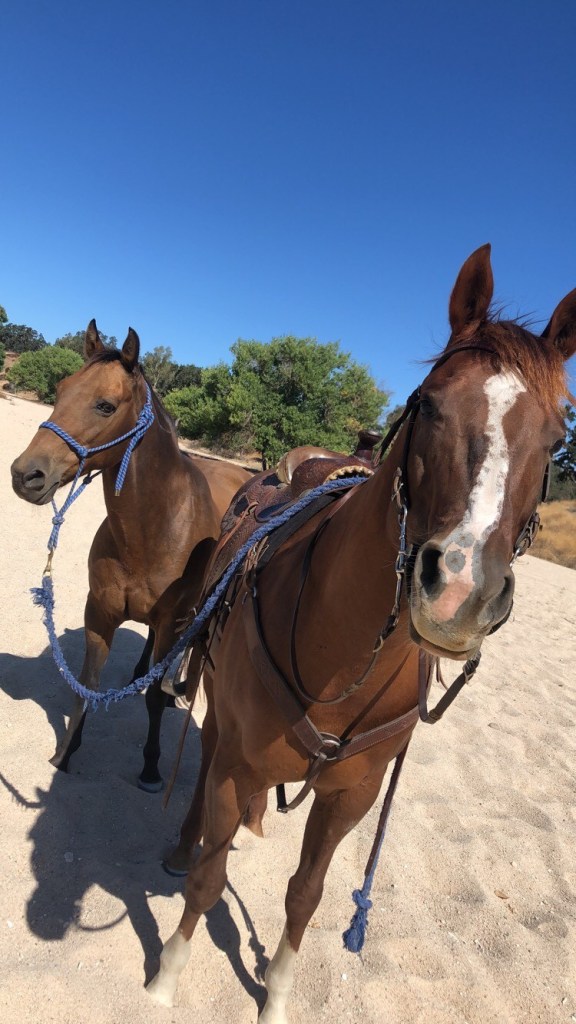
Now put yourself in my boots. Recently just retiring my first-everything horse, I began to go into the horse market looking for a ready-to-go barrel horse. With races coming around the corner fueling my passion, I found the one. Two months later, this barrel racer sits injured and off her horse for two months. Back up and on my horse, Margarita hits some minor inflammation in her hind suspensory ligaments after a race. In the horse world, no one ever wants to hear anything bad about suspensory ligaments. In my case, I was looking at some serious time off.
As I look back on the eight months, I feel defeated. I feel frustrated. Why do things happen this way? There is only one answer to that question and that is just how the livestock industry goes.
Just as that cattleman was getting ready to breed his heifers, that bull took a knee and plans changed. Just as I was getting ready to get my season going, my horse wasn’t there. It is times like these that teach such a valuable lesson in the industry: be patient.
What is key to keep in mind through out these ups and downs is remembering what is important. There will always be another barrel race and with that in mind, the health of my animal is most important. In the livestock industry, patience will get you much further than a broken leg.

 Agriculture Communications